
Credit Cards at UK Casino Sites: What the Rules Allow
 Available in GB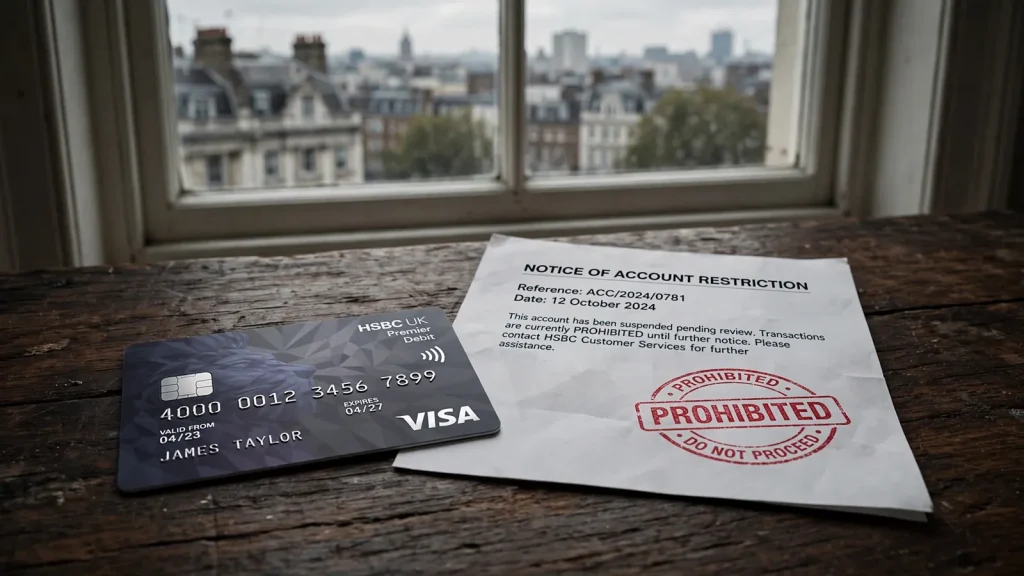
UK-licensed casinos cannot accept credit-card payments for gambling, including payments routed through a money service business.
Why a UK-Licensed Casino Won’t Take Your Credit Card
If you are looking for a UK casino that accepts credit-card deposits, the short answer is no: a UK-licensed casino cannot accept a credit-card payment for gambling. That applies whether you want to fund a casino account directly, add money through a payment service, or use the card to play casino games after the deposit has been made.
The restriction is not an individual operator’s preference. It is a rule that applies to remote gambling licensees serving customers in Great Britain. A casino holding a licence from the UK Gambling Commission must follow it as a condition of offering real-money gambling. Turning a credit card away is therefore part of the operator’s regulatory obligations, not a sign that the cashier is malfunctioning.
The credit-card gambling ban has been in force since 14 April 2020 and has not been relaxed. It covers credit-card payments for gambling, including payments made through a money service business. In practical terms, changing the route by which the funds reach the casino does not make a prohibited credit-card deposit acceptable.
What counts as a credit-card deposit?
The clearest example is entering credit-card details in the casino cashier and attempting to transfer funds into your gambling account. That payment must be rejected by a UK-licensed casino.
The rule also matters when a credit card is used behind another payment route. A wallet payment cannot be used for gambling where the wallet permits credit-card funds to finance that gambling transaction. The name displayed in the casino cashier does not change the nature of the underlying funding. If credit is being used to supply the gambling money, the payment route is not permitted for a UK-licensed operator.
This is why simply looking for a familiar card logo is not enough. A payment method may be technically visible in a general payment environment, while the particular card or funding source is not eligible for a gambling transaction. The restriction concerns the source of the money as well as the button you press to submit the deposit.
Payments & Payouts at UK Online Casinos
Can you use a credit card to gamble online in the UK?
Not at a UK-licensed online casino. You cannot use a credit card to make a gambling deposit, and you cannot work around the restriction by routing the card through a payment service that allows those credit-funded gambling payments.
The same answer applies whether you describe the transaction as playing online casino games, making a casino deposit, gambling online or funding a slots account. The wording changes, but the payment rule does not. A UK-licensed operator cannot accept credit-card gambling payments for its remote casino service.
That does not mean every card payment is treated identically. A debit card is not a credit card, although the specific payment method and its eligibility still need to be confirmed with the operator. The important distinction here is the funding source: a credit card cannot be used for the gambling transaction at a UK-licensed casino.
Why the casino refuses the payment
A declined credit-card deposit is the expected outcome under the British rules. The casino is not supposed to invite you to try another credit card, disguise the transaction under a different description, or direct you to a wallet that accepts credit-card funding for gambling. Those approaches would not turn the payment into an allowed transaction.
Casinos That Accept Upaycard in the UK
The payment may be rejected before the casino account is credited. In other cases, a card or wallet option may be unavailable for gambling even if it is familiar from other types of online shopping. Payment services do not have one universal set of permissions across every merchant category, and gambling transactions are subject to the specific restrictions applied by the UK regulatory framework.
A failed payment is also not evidence that the casino accepts credit cards for some customers but not others. It may simply reflect the operator’s obligation to prevent prohibited funding. The sensible reading is that the payment route is unavailable for that gambling transaction, rather than that repeated attempts might eventually succeed.
Does the rule apply to all UK-facing casinos?
The rule applies to casinos legally serving customers in Great Britain under a UK Gambling Commission licence. Remote gambling operators selling into the British market must hold the relevant local licence, regardless of where the company itself is based. A legal online casino serving customers in England, Scotland or Wales therefore cannot accept credit-card payments for gambling.
Offshore casinos do not hold a UK Gambling Commission licence, meaning their payment rules and availability of credit card deposits may differ from those of UK-licensed operators.
A site outside the UKGC regulatory system is a different legal category. Offshore casinos do not hold a UK Gambling Commission licence, and their payment pages may describe products or funding routes differently. That does not make them UK-licensed casinos, nor does it change the rule applying to licensed operators in the British market. The fact that a website displays a credit-card logo is not proof that it is authorised to offer gambling to British customers under the local framework.
For that reason, a search result or payment badge should not be treated as permission to use a credit card. The relevant question is whether the casino is a UK-licensed operator and whether the proposed transaction is a credit-card payment for gambling. If both points apply, the answer is no.
What to expect when you open the cashier
You may find that credit cards are absent from the deposit screen, disabled when you select gambling, or declined when the payment provider identifies the funding source. These are different ways of enforcing the same restriction. A casino should not accept the deposit and then rely on you to explain how the money was funded.
The rule is particularly important when a payment account can hold money from several sources. A wallet may be a recognised payment service, but it cannot be used for gambling where the funds are supplied by a credit card and the wallet permits that use. The payment method’s brand alone does not settle the question.
So, if your plan is to deposit at a UK online casino with a credit card, plan around a different funding source instead. The key boundary is straightforward: UK-licensed casinos cannot accept credit-card payments for gambling, whether the card is presented directly or used through a prohibited intermediary.
Casinos That Accept Debit Cards in the UK
What the Credit Card Gambling Ban Means in Practice
The UK credit card gambling ban took effect on 14 April 2020. From that date, remote gambling operators serving customers in Great Britain have been required to prevent credit-card payments for gambling. The restriction applies to credit-card funding made directly through the operator’s cashier and also covers credit-card payments routed through a money service business.
The rule is still in force. It has not been relaxed, replaced by a narrower version, or limited to particular casino games. In practical terms, a UK-licensed casino cannot treat a credit card as an acceptable funding route for a real-money gambling account. A card may be issued by a familiar bank or carry a widely used payment-network logo, but that does not change its classification as a credit card.
The restriction also applies when credit-card funds are moved through an intermediary. A payment wallet or money service cannot be used to get around the ban where the wallet allows credit-card funds to be used for gambling. The route taken by the money is therefore relevant: changing the payment screen or inserting another service does not make prohibited funding acceptable.
This is why older payment information can be misleading. A casino page, review or forum post may describe cards as available without making clear when that information was written, which country it covered, or whether it referred to debit-card payments rather than credit-card payments. The position for a UK-licensed casino must be assessed against the rule that applies now, not against an archived cashier or a general payment list.
Historical Context
The credit-card gambling ban has been in force since 14 April 2020 and has not been relaxed. Any information or discussions regarding card availability that pre-date this period may no longer be accurate.
The date is also important when reading discussions about the UK casino credit card ban. Material published before 14 April 2020 may describe a payment environment that no longer applies. Material published afterwards may still use “card payments” as a broad label, even though the relevant distinction is between debit cards and credit cards. A headline can therefore sound permissive while the actual payment conditions are more limited.
The ban does not turn every card transaction into the same thing. The decisive issue is whether the payment is a credit-card payment for gambling. That is why the payment method’s current classification and the funding route matter more than a short label on a casino’s banking page.
Nor should the ban be treated as a temporary interruption. The regulator introduced the prohibition on 14 April 2020, and the rule remains part of the conditions under which remote gambling operators serve the British market. Looking for a newly reopened credit-card option at a UK-licensed casino is therefore based on an assumption that the rule has changed. It has not.
For a reader checking whether credit cards are allowed for gambling in the UK, the useful historical point is simple: the prohibition began on 14 April 2020 and remains active. The practical effect is that credit-card funding cannot be accepted for gambling by UK-licensed remote operators, including when an intermediary is used to try to disguise the original source of the funds.
Wirecard at UK Online Casinos: Check Card Acceptance
Recommended online casinos
- BritsinoBonus: Welcome Package – Get your £2,200 + 2,000 FS · Payout speed: 1-3 business days
- ChanzeBonus: Slots Welcome Bonus #1 200% up to €500 · Payout speed: 1-3 business days
- SlotoSportBonus: 500% up to £ 10 200+ 777 FS · Payout speed: 1-3 business days
- BeOnBetBonus: 100% up to €500 + 100 FS · Payout speed: 1-3 business days
- SpinFormulaBonus: 550% Up To £15,000 + 550 FS · Payout speed: 1-3 business days
- x3betBonus: Welcome Pack 100% Up to £1.000 + 200 Free Spins · Payout speed: 1-3 business days
Checking Which Payment Methods a Casino Actually Accepts
A casino’s payment page is the practical place to check whether a payment method is available to you. A logo on a landing page, a list in an article or a general statement about accepted cards does not confirm that the method will appear in your account. The cashier is where the operator applies its current rules, your country, account status and the payment product being used.
This matters particularly when you are looking for a credit-card alternative. A site may display Visa or Mastercard among its payment brands, yet that does not mean every Visa or Mastercard product can be used for a gambling transaction. The card type, issuing arrangement and the operator’s own controls can affect what appears at checkout. A specialist review may report that sites list Visa and Mastercard, but current UK availability and card-product eligibility still need to be checked in the cashier.
Start with the casino’s cashier
Open the casino’s deposit area after signing in, rather than relying only on the public payment page. Look for the complete list of methods displayed for your account. The list may differ from information shown before registration because the cashier can take account location and eligibility into consideration.
Check the following points:
- Is the payment method shown as available, or is it only displayed as a brand?
- Is it offered for deposits, withdrawals, or both?
- Does selecting it reveal any country, currency or account restrictions?
- Does the cashier identify the particular card or payment service that can be used?
- Are there instructions that require account verification before the method becomes available?
A method should not be treated as usable merely because its name appears somewhere on the site. If the cashier does not offer it when you attempt to make a deposit, do not assume that entering the details manually will make it work. Payment forms are not invitations to negotiate with the rules.
Check the method after signing in
Availability can depend on the account rather than the casino’s general advertising. Sign in with the account that will be used for gambling and inspect the payment screen in that account. If you are comparing several casinos, repeat the check separately at each one; a method shown at one operator may not be listed at another.
The same principle applies to card products. Visa and Mastercard are payment networks, not a promise that every card carrying one of those marks will be accepted. The cashier may distinguish between eligible and ineligible products, or may simply decline a transaction when the product does not meet its conditions. An acceptance logo therefore answers only a broad question: which payment brands the operator says it supports. It does not answer whether your particular card is eligible.
Do
- Open the casino’s cashier after signing in to see true availability.
- Verify the operator’s licence on the UK Gambling Commission public register.
- Check if the payment method is available for both deposits and withdrawals.
Don’t
- Rely on general website logos or headlines as proof of eligibility.
- Assume a card is a debit card just because it carries a Visa or Mastercard logo.
- Attempt to route credit-card funds through a digital wallet to bypass the ban.
For credit-card searches, the position is more direct. A UK-licensed casino cannot use its cashier to accept credit-card payments for gambling. If a page appears to suggest otherwise, the cashier and the operator’s regulatory position matter more than the wording of a headline. Do not attempt to route a credit-card payment through another payment service where that service permits credit-card funds to be used for gambling.
Separate deposits from withdrawals
A payment method may be listed for adding funds without being available for receiving a withdrawal. Before choosing one, open the withdrawal section as well and check whether the same method appears there. Treat a method as a deposit-only option if the cashier labels it that way.
This distinction is important when a payment provider is described generally as a casino payment option. The operator may accept it for deposits but use a different route for payouts, or require the money to return through the original payment source under its closed-loop and anti-money-laundering controls. A method’s presence on the deposit screen is therefore not evidence that it is a complete route for both directions.
Casinos That Accept eCheck in the UK: What to Check
Where the cashier offers separate tabs or menus, inspect both rather than assuming the deposit list applies to withdrawals. Read any notes attached to the withdrawal method before confirming a deposit. That can reveal whether another payment route or additional verification will be required later.
Confirm the account and payment details
The cleanest transaction path is generally to use an account and payment route belonging to the same customer. Check that the name and other ownership information on the payment account match the casino account. A mismatch can create avoidable questions about who owns the funds and may lead to further checks.
Also review the account currency before making a transaction. Casino pages may state that pounds sterling are supported, but the currency selected for your individual account is the relevant detail. Confirm it in the cashier and account settings so that the transaction is not affected by an unexpected conversion.
Before confirming payment, read the final screen for any fee, exchange-rate information or special condition shown by the casino or payment provider. Costs can arise from more than one place, including the casino, the provider, the card issuer or bank, currency conversion and the payment network. A method with no visible casino charge is not automatically the least costly route.
Verification Steps
- Confirm the operator holds a valid UK Gambling Commission licence.
- Sign in to the casino to view the specific cashier options for your account.
- Ensure the payment method supports both deposits and withdrawals.
- Verify that the account currency matches your intended funding source.
Finally, confirm that the operator holds the required UK Gambling Commission licence before depositing. The payment screen tells you what the casino currently offers; it does not, by itself, establish that the operator is authorised to serve customers in Great Britain. Use the regulator’s public register for that separate check, then rely on the signed-in cashier to establish which payment method is actually available to your account.
Why a Casino’s Payment Page May Not Match Its Headline
A page may advertise card payments while the cashier shows no usable card option for you. That apparent contradiction often comes from the difference between a general payment list and the options made available to a particular customer in the United Kingdom.
Some casino pages list Visa and Mastercard among their payment methods. A specialist affiliate review may also describe these cards as available. That does not establish that a UK customer can make a gambling deposit with a credit card. The live cashier remains the relevant place to check whether a payment method is enabled, whether it is available in the UK and whether the particular card product is eligible.
There is also a legal boundary that a headline can obscure. Remote gambling licensees serving Great Britain must hold a Gambling Commission licence, and UK-licensed casinos cannot accept credit-card payments for gambling. A page presenting itself as a British-facing casino therefore cannot turn a prohibited credit-card deposit into an acceptable one merely by displaying a Visa or Mastercard logo.
Casino sites that accept Jeton in the UK
When the claim concerns an offshore casino
Some pages promote casinos outside the UK Gambling Commission system as alternatives to UK-licensed sites. They may describe themselves as not being on GamStop, or suggest that they accept credit cards. Those labels do not provide evidence that a card deposit will work, that the card issuer will authorise it or that the arrangement is lawful for the operator serving British customers.
An offshore casino operates without a UK Gambling Commission licence. Such a site may be accessible to residents of the UK, and a player does not incur a fine or criminal prosecution merely for playing there. The important distinction is that accessibility is not the same as UK regulation. Remote gambling operators selling into the British market are required to hold the relevant local licence, while advertising offshore or unlicensed casinos is restricted.
This also affects the value of a payment claim. A foreign site’s list of accepted cards may describe a wider international service rather than the account and payment conditions offered to a customer in the UK. It may not reflect card-issuer restrictions, the customer’s location or the funding route used.
What a payment headline proves
A headline is only an indication that a payment method has been mentioned somewhere on the site or in material describing it. It does not prove that:
- the method is available to UK customers;
- the cashier will display it after registration;
- the card is a debit rather than a credit product;
- the payment provider will approve the transaction; or
- the same route can be used when funds are withdrawn.
For that reason, claims about online casinos said to accept credit cards should be treated as prompts for verification, not as recommendations. The useful check is specific: identify the operator’s regulatory status, open the account cashier and confirm the payment method and its UK eligibility before attempting a transaction. Do not infer availability from a logo, an old review or a page aimed at customers in another country.
A payment page can therefore be accurate in a broad commercial sense and still be unsuitable for a UK customer. The distinction is inconvenient, but a card logo is not a licence, and a headline is not confirmation that a credit-card gambling deposit is permitted.
Payment Options You May See at UK-Friendly Casinos
Payment pages at casinos serving the UK can contain several different categories rather than one universal route. A specialist review of casino payment arrangements mentions Visa, Mastercard, bank transfer, e-wallets and several cryptocurrencies among the methods displayed across the websites it examined. That gives you a useful map of the payment landscape, but it is not a promise that every casino will show every option.
Debit Cards
Available through networks like Visa and Mastercard, provided they are not credit-funded.
Bank Transfers
Funds are moved directly via a bank account rather than a card network.
E-wallets
Separate payment routes where money is held with a provider before being sent to the casino.
Cryptocurrencies
A broad category of digital assets that vary by operator support.
Debit cards and card networks
Visa and Mastercard may appear in a cashier as card brands. In a UK-facing casino, that reference should not be read as permission to use a credit card for gambling. The UK restriction applies to credit-card payments for gambling, including credit-card funding routed through a money service business. A card option therefore needs to be understood in the context of the actual card product and the casino’s payment controls.
A debit card may be presented through one of these networks, while a credit card carrying the same brand is not acceptable for a gambling deposit at a UK-licensed casino. The logo alone does not settle that distinction. It also does not show whether the method is available for withdrawals.
This is why descriptions of “credit card casinos” can be misleading when they simply repeat Visa or Mastercard logos. The payment brand and the permitted source of funds are separate questions.
Bank transfers
Bank transfer is another category that can appear on UK casino payment pages. It moves funds through a bank account rather than through a card network or an electronic wallet. Whether the casino supports it for deposits, withdrawals or both depends on the particular cashier and its payment rules.
Casinos That Accept Citadel in the UK: Payment Guide
Bank transfer can also involve account details that must match the customer’s gambling account. A clean arrangement is to use an account held in your own name and keep the account information consistent with the casino profile. That helps avoid basic ownership questions during a transaction, although it does not remove other verification requirements.
E-wallets
E-wallets provide a separate payment route in which money is held with a payment provider before it is sent to the casino. They are distinct from cards and bank transfers, but the label does not guarantee a particular service, direction of payment or promotion status.
Individual services may have their own terms, and a wallet must not be used where it allows credit-card funds to be used for gambling. The restriction follows the funding route, not merely the name of the wallet shown at checkout.
Cryptocurrencies
Several websites also mention cryptocurrencies as a payment category. This is a broad label rather than a single method: the supported assets, transaction process and account requirements can differ between operators. A cryptocurrency reference therefore does not establish that every casino accepts the same assets, nor that a particular asset can be used to withdraw winnings.
Attention A payment method appearing in a general list may be restricted to deposits only or may not be available for withdrawals.
A payment method appearing in a general list may be deposit-only, withdrawal-only or available in both directions. Some casinos may also apply different terms to different methods. That distinction matters more than the presence of a familiar logo or category on an information page.
What these categories do not tell you
A list of payment methods is an overview of what may be encountered, not a ranking of the best online casinos and not evidence that a site accepts credit cards. It does not establish that a method is currently available to every UK customer, that it supports both deposits and withdrawals, or that it is compatible with a particular account.
The practical point is simple: payment categories describe possible routes, while the casino’s live transaction rules determine which route can actually be used. A familiar name on a page is not the same thing as an available, permitted payment option.
Making a Deposit Without a Credit Card
A deposit at a UK-licensed casino must use a payment route that the operator permits for gambling and that does not rely on credit-card funding. The practical task is not simply to find a button marked “deposit”. You need to check that the payment account belongs to you, that the casino accepts the route for your account, and that the transaction will be recorded in a way that supports any later withdrawal.
Before adding funds, complete the account checks requested by the operator. Remote gambling businesses must verify your age before allowing you to deposit. They must also prompt new customers to set a financial limit before the first deposit and provide account-level controls that remain accessible afterwards. These controls are separate from the payment method: choosing a bank transfer or wallet does not remove the need to set and review your gambling limit.
UK casino sites that accept EcoPayz (Payz)
Use matching personal details throughout the process. The name and account information at the casino should correspond with the payment account you use. Keeping the casino account and payment route under the same ownership reduces the likelihood that basic ownership checks will interrupt the transaction. It also gives the operator a clearer record if it needs to confirm where money came from or where it should be returned.
The cashier should show the available route for your account before you confirm payment. Check the payment instructions carefully, including whether the method is available for deposits, whether it can also receive withdrawals, and whether the displayed account currency matches the currency you intend to use. A page may present a method in general terms while its availability depends on the customer’s location, account status or the provider’s current arrangements.
Read the confirmation screen before authorising the payment. Check the amount, currency, any stated charge and the payment account selected. Payment costs can arise from more than the casino itself: a provider, card issuer or bank may apply its own charge, while currency conversion can include a spread. A payment that looks free at the cashier may therefore cost more once the transaction is converted or processed outside the casino.
A successful deposit does not mean that a later payout will follow the same route or arrive at the same speed. UK anti-money laundering controls generally require gambling funds to be returned to the original payment source. If that route cannot receive a withdrawal, the casino may ask for another method and carry out additional verification. That is why withdrawal support should be checked before you deposit, rather than after a balance has accumulated.
Summary
- UK-licensed casinos cannot accept credit-card payments for gambling.
- This ban includes payments routed through intermediary money service businesses.
- Always verify payment eligibility through the signed-in casino cashier.
- Check both deposit and withdrawal compatibility before adding funds.
The transaction itself may appear immediate, but a payout involves extra stages. A specialist review has reported that a card deposit can be instant while the related withdrawal takes several business days. The difference is not necessarily a payment-system fault: the casino may need to approve the withdrawal, review the account and complete verification, particularly when it is the first payout. Treat the deposit confirmation as evidence that funds were added, not as a promise about withdrawal timing.
Keep the confirmation message and any transaction reference. If the balance does not update, do not submit repeated payments before checking the cashier, your bank or the casino’s support channel. Duplicate attempts can make it harder to identify which transaction succeeded. If the operator asks for ownership or identity information, provide it through the casino’s stated secure process rather than sending payment details through an informal channel.
The cleanest transaction path is one named account used consistently for both deposit and withdrawal, with the account limits set before funds are added. That approach does not guarantee an immediate payout, but it avoids several preventable complications at the point when you decide to withdraw.
Deposit Minimums and Limits to Check First
The minimum amount accepted for a first deposit is not necessarily the same across every payment route. A specialist review places the starting range at £10–£20, with the exact figure depending on the method selected in the cashier. Treat that range as a reference point rather than a standing promise: the amount shown on the deposit screen is the one that applies to your account and chosen method.
This matters when you are looking for a UK casino that appears to support a particular card or payment route. The minimum is set by the operator and may be linked to the provider’s rules, so changing the method can change the amount required. Read the transaction screen before confirming rather than assuming that the lowest advertised figure applies everywhere.
Maximum deposit limits
A casino may apply several different maximums:
- a ceiling for one transaction;
- a daily limit; and
- a monthly limit.
These maximum deposit controls can differ between payment methods. They can also change according to your account status. A specialist review notes that both the selected method and the customer’s account position affect the applicable maximum, so a limit shown for one route should not be treated as universal.
The practical check is straightforward: open the cashier, select the payment method you intend to use, and look for the minimum and maximum displayed for that route. If the account has a separate responsible-gambling or financial-controls area, check that as well. Do not plan a larger deposit until the account screen confirms that it is permitted.
Set a financial limit before depositing
UK Gambling Commission rules place an additional control at the start of the customer relationship. Before a new customer makes a first deposit, the remote operator must invite them to set a financial limit. The account must also provide accessible controls for reviewing or changing those limits.
That means the amount you can deposit is not the only figure worth checking. Your own account-level limit may restrict a transaction even when the payment method and casino cashier display a higher maximum. Set the limit deliberately, before entering payment details, and use the account controls to confirm what remains available.
Financial Limits
Before depositing, you should be aware of several layers of limits: the minimum amount required by the operator, the maximum allowed per transaction, and your own account-level financial limits.
For any search for a credit-card deposit casino in the UK, the same checks apply to the permitted alternative payment route: identify the method’s minimum, review its transaction and period maximums, and confirm the financial limit attached to the account.
Paying by Credit Card: The Rule Still Applies
If you are looking for a UK casino that lets you deposit by credit card, the direct answer is no: a UK-licensed casino cannot accept credit-card payments for gambling.
This applies to remote gambling licensees serving customers in Great Britain. The restriction covers a credit card used directly at the cashier, so entering the card details as a deposit method is not permitted. It also covers credit-card funding routed through a money service business. A different payment route does not make the underlying credit-card funding acceptable.
The rule also affects some digital-wallet payments. A UK-licensed casino cannot accept a wallet payment where the wallet allows credit-card funds to be used for gambling. In other words, moving the money through an intermediary does not remove the restriction.
The regulator introduced the credit-card gambling ban on 14 April 2020, and it remains in force. A casino’s payment page, promotional wording or an old review cannot override that rule. If a UK-facing cashier appears to show a credit-card option, treat that as a reason to check the current payment information carefully rather than as permission to deposit. Payment menus can contain general card branding, outdated information or options that are not available to every customer.
This is why searches for a “pay by credit card” casino in the UK can produce confusing results. A site outside the UK Gambling Commission system may describe credit-card deposits differently, but it is not a UK-licensed casino and does not provide the regulatory position that applies to licensed remote gambling in Britain. UK-licensed casinos cannot accept credit cards for gambling, regardless of how the payment option is presented.
UK Casino Sites That Accept Skrill: Payment Guide
A credit card therefore cannot be used as a gambling deposit method at a UK-licensed casino. The relevant question is not which casino has found a workaround, but which permitted payment method is shown as available to your account.
Other Ways to Pay and Receive Withdrawals
Can You Play Online Slots with a Credit Card?
You cannot fund online slot play with a credit card at a UK-licensed casino. The restriction applies to slot deposits just as it applies to every other form of remote gambling. A casino cannot accept a credit-card payment directly, and it cannot accept a wallet payment when that wallet allows credit-card funds to be used for gambling.
The rule has applied since 14 April 2020 and has not been relaxed. This means that searching for a site where you can play slots with a credit card in the UK does not change the position for licensed remote gambling operators. A payment option shown elsewhere is not evidence that it can lawfully be used for gambling by customers in Britain.
The slot rules also affect how the games can be played. Online slot autoplay is banned in Britain, so each spin must be started manually. Slot spins must last at least 2.5 seconds. These requirements apply to online slot play itself, regardless of which permitted payment route was used to fund the account.
There are also different maximum stakes according to age. For customers aged 25 and over, the maximum stake per game cycle is £5. For customers aged 18 to 24, it is £2. The £5 limit for all adults came into effect on 9 April 2025; the lower limit for younger adults remains relevant.
So, can you play online slots with a credit card in the UK? Not at a UK-licensed casino. You must use a payment route that the remote gambling licensee accepts for gambling and that is not funded through a credit card. The cashier’s available methods determine what can be used on that particular account, while the slot rules govern how the game may be played once you are able to deposit.
Why must withdrawals return to the deposit method?
Returning funds to the original payment source is a common anti-fraud and anti-money-laundering control. Using a different route may require extra verification.
What is the fastest withdrawal method for UK casinos?
PayPal, open banking services, and debit cards linked to fast payout systems are generally among the quickest. The casino’s approval process and your account verification status also affect how soon you receive the funds.
Which payment methods are accepted in Great Britain?
UK casinos commonly offer debit cards such as Visa and Mastercard, bank transfers or open banking, and e-wallets including PayPal, Skrill, and Neteller. Some also accept Paysafecard, Apple Pay, or Jeton; check the casino cashier for current availability.
Are Visa and Mastercard deposits definitely debit cards?
No, the logo alone does not confirm which card product is eligible. Check the cashier and make sure you are using an eligible debit card; UK-licensed casinos cannot accept credit-card gambling deposits.
Which method has the lowest fees?
There is no universally cheapest method. Compare casino and provider charges, bank or issuer fees, any currency-conversion spread, and network costs for your transaction.
Is Skrill available?
Yes, Skrill is available at some UK-friendly casino sites. It may be excluded from promotions.
Why can a fast payout casino still delay my withdrawal?
A casino must process the withdrawal internally, and that approval can take time. First withdrawals may also take longer while verification is completed.