
Progressive Jackpot Slots UK — How Big Wins Work
 Available in GB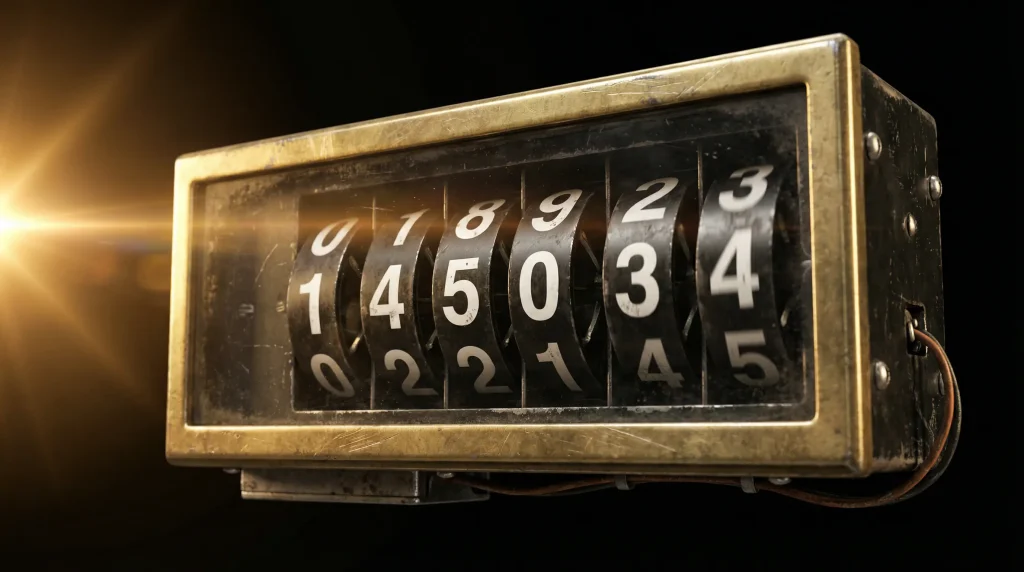
How Progressive Jackpots Build to Seven Figures
A progressive jackpot slot works differently from every other game in the casino. In a standard slot, the maximum payout is fixed — it’s defined by the paytable and doesn’t change regardless of how many players spin or how long the game runs. A progressive slot adds a growing prize pool that increases with every bet placed on the game across every casino where it’s available. A small percentage of each wager — typically between 1% and 3% — is siphoned into the jackpot fund. The pool grows continuously until one player triggers the winning combination, collects the accumulated amount, and the counter resets to its seed value.
The seed value is the minimum amount the jackpot restarts at after being won. For a game like Mega Moolah, the seed is £2 million — the game provider and network operators fund this starting figure to ensure the jackpot is immediately attractive even seconds after the previous payout. From the seed, the pool begins climbing again with every bet placed by every player at every casino carrying the game. During periods where the jackpot hasn’t been hit for months, the prize can reach eight figures. The largest online progressive jackpots paid out in the UK have exceeded £15 million.
The contribution mechanic is the engine behind the growth and also explains why progressive slots carry lower base-game RTPs than non-progressive equivalents. If the game diverts 2% of every wager to the jackpot pool, that 2% is subtracted from the game’s return. A non-progressive slot with the same mechanics might carry a 96% RTP. The progressive version of the same design might sit at 88% to 93% for the base game, with the jackpot contribution making up the difference. You’re paying for the chance of the massive payout through a reduced return on every spin — a trade-off that’s invisible unless you check the RTP figure.
Recommended online casinos
- BritsinoBonus: Welcome Package – Get your £2,200 + 2,000 FS · Payout speed: 1-3 business days
- ChanzeBonus: Slots Welcome Bonus #1 200% up to €500 · Payout speed: 1-3 business days
- SlotoSportBonus: 500% up to £ 10 200+ 777 FS · Payout speed: 1-3 business days
- BeOnBetBonus: 100% up to €500 + 100 FS · Payout speed: 1-3 business days
- SpinFormulaBonus: 550% Up To £15,000 + 550 FS · Payout speed: 1-3 business days
- x3betBonus: Welcome Pack 100% Up to £1.000 + 200 Free Spins · Payout speed: 1-3 business days
Jackpot Networks — Mega Moolah and Beyond
Progressive jackpots operate on networks, and the network size determines how fast the prize pool grows. The larger the network — meaning more casinos carrying the game and more players spinning at any given moment — the faster the contributions accumulate. This is why the biggest jackpots come from widely distributed games rather than casino-exclusive titles.
Mega Moolah, developed by Microgaming and now distributed through the Games Global network, is the most famous progressive slot in the world. The game operates on a four-tier jackpot system: Mini, Minor, Major, and Mega. The Mega jackpot seeds at £1 million and has repeatedly grown past £10 million before being triggered. Mega Moolah is available at hundreds of casinos globally, which means the contribution pool is enormous and the jackpot grows quickly. The game is over fifteen years old, and its continued prominence is entirely a function of its jackpot history — the base game itself is visually dated and mechanically simple compared to modern slot design.
Mega Fortune, originally developed by NetEnt, competes in the same tier with a three-level progressive system. Its Mega jackpot has produced some of the largest online payouts in history, including wins exceeding €17 million. The game’s bonus wheel mechanic — a three-stage spinning wheel where each level brings you closer to the top-tier jackpot — has become one of the most recognisable features in progressive slot design.
Beyond the headline games, several mid-tier progressive networks operate in the UK market. Pragmatic Play’s jackpot network runs across multiple slot titles, pooling contributions from games like Gates of Olympus and Wolf Gold into shared prize pools. Playtech’s Age of the Gods series connects a themed set of progressive slots to a common jackpot fund, offering a different aesthetic while following the same accumulation model. Red Tiger Gaming operates daily jackpot networks where smaller pools must pay out within a fixed 24-hour window — a lower-prize, higher-frequency alternative to the mega-jackpot format.
Local or standalone progressives exist at individual casinos where the jackpot pool is funded solely by bets placed at that single site. These pools grow more slowly and reach lower peak values than network progressives, but the principle is the same: contributions accumulate from player bets until the jackpot triggers. The trade-off between network and standalone is scale versus odds — network jackpots are larger but statistically harder to hit, while standalone progressives are smaller but theoretically triggered more frequently.
Your Realistic Odds of Hitting a Progressive
The odds of triggering a major progressive jackpot are extremely long. For Mega Moolah’s Mega tier, independent analysis and historical payout data suggest the probability is roughly 1 in 50 million spins. For context, if you played 500 spins per hour, eight hours a day, every day, it would take an average of over 34 years to accumulate 50 million spins. These are not odds that any individual player can meaningfully overcome through volume of play.
Some progressive jackpots use a “must hit by” mechanic, where the jackpot is programmed to trigger before reaching a specific value. This doesn’t change the per-spin probability of hitting the jackpot at lower levels, but it does guarantee that the pool pays out within a defined range. Red Tiger’s daily jackpots use this structure — if the pool hasn’t been triggered naturally within 24 hours, the system forces a payout. These time-bounded progressives offer more predictable payouts but at dramatically lower values than the open-ended mega jackpots.
Whether higher bets increase your jackpot odds depends on the specific game’s mechanics. Some progressives, including Mega Moolah, give higher-bet players a greater probability of entering the jackpot bonus round — meaning a £5 spin has a better chance of triggering the jackpot feature than a £0.25 spin. Others award the jackpot entirely at random regardless of bet size. The game’s rules will specify the trigger conditions, and reading them is essential if you’re making bet-size decisions based on jackpot probability rather than pure base-game entertainment.
The honest framing is this: playing a progressive jackpot slot is not a strategy for making money. The base-game RTP is lower than non-progressive alternatives, the jackpot odds are astronomically long, and the expected value of the jackpot contribution per spin is a tiny fraction of a penny. You play progressives for the same reason you might buy an occasional lottery ticket — because the possibility of a life-changing payout, however remote, adds a dimension of excitement that fixed-payout games don’t offer. That excitement has a cost, and the cost is embedded in every spin.
The Prize Pool Has No Memory
A common misconception about progressive jackpots is that a pool that hasn’t paid out in a long time is “due” to hit. It isn’t. Each spin on a progressive slot is an independent event with a fixed probability of triggering the jackpot, regardless of the current pool size or how long it’s been since the last payout. A jackpot at £15 million is no more likely to trigger on the next spin than it was when it stood at £2 million. The pool size reflects accumulated contributions, not accumulated probability.
This is the same independence principle that applies to roulette wheels and coin flips — past outcomes don’t influence future ones. The jackpot’s random number generator doesn’t know how much money is in the pool, doesn’t track how many spins have occurred since the last win, and doesn’t adjust its probability based on either factor. “Overdue” jackpots are a narrative convenience, not a mathematical reality.
The only rational approach to progressive slots is to treat them as entertainment with a known cost. Set a session budget that accounts for the lower base-game RTP. Accept that the jackpot is overwhelmingly likely not to trigger during your session. Enjoy the game for what it offers in the base rounds and bonus features, and let the progressive counter tick upward in the background as the long-shot possibility it is. If the jackpot lands, it will be the statistical outlier of a lifetime. If it doesn’t — and it almost certainly won’t — you’ve had the experience you budgeted for, no more and no less.